
Thanks to a new borehole, the inhabitants of Bikoko can now avoid long walks and waterborne diseases.
Situated 52 km from Bétaré-Oya in the East region, the village of Bikoko is home to around 800 people. Thanks to a hand-operated borehole drilled by the Cameroon Oil Transportation Company (COTCO), the village now has sustainable access to drinking water. The infrastructure was officially handed over to the community on 18 March 2026 during a ceremony attended by many members of the community. For the residents, this achievement represents much more than just a water supply project. “Today, in Bikoko, it’s a celebration of water”, says Dena Zamari, with emotion. For years, she explains, families had to fetch water from the river, which entailed health risks. “Now, that’s over. It’s a thing of the past”, she rejoices.
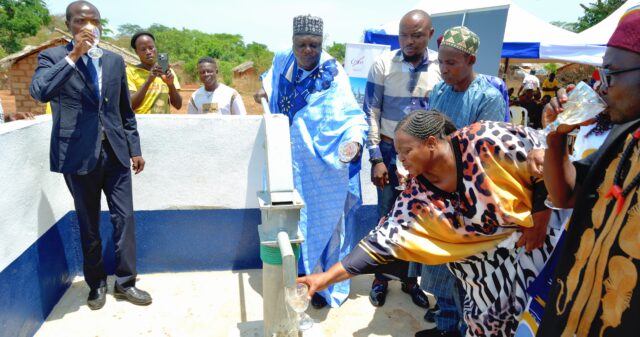
Built as part of COTCO’s corporate social responsibility programme, this borehole aims to improve the living conditions of the people of Biboko in the long term. “COTCO is supporting the Cameroonian government’s water supply policy to improve the quality of life for the local population”, says André Belle Gorsiri, Manager of the Corporate Social Responsibility Department and representative of General Manager, Jean-Paul Simo Njonou.
The 5.8 million CFA franc project will also help to reduce exposure to waterborne diseases. Donald Sodea, the Deputy Subdivisional Officer of Bétaré-Oya, said that this initiative “provides a concrete response to an essential need”. Véronique Soumai, an inhabitant, shares this sentiment: “Water has come to us at home. Where there is drinking water, there is health”.
To ensure the well’s long-term sustainability, a local management committee has been established, and maintenance staff have been trained. This is the second hand-drilled well that COTCO has handed over in 2026, following the completion of more than sixty hand-drilled wells and nine solar-powered wells along the Chad-Cameroon pipeline since 2012.